Problem
This was my undergraduate thesis at CUJAE (Automation Engineering, 2018–2023). The proposal targeted a pediatric hospital’s hydraulic supply, where staff was running a manual 6-hour pump cycle — physically present, watching tank and cistern levels and switching the pump by hand on a fixed schedule. The thesis asked whether the cycle could be replaced with an autonomous software-driven solution, and what the supervisory layer for that solution should look like.
I haven’t practiced industrial automation professionally since 2023 — this case study is here as background and signature work, not as an active service. The control logic was validated in a simulated environment via OPC-UA.
Approach
The proposal spanned three layers:
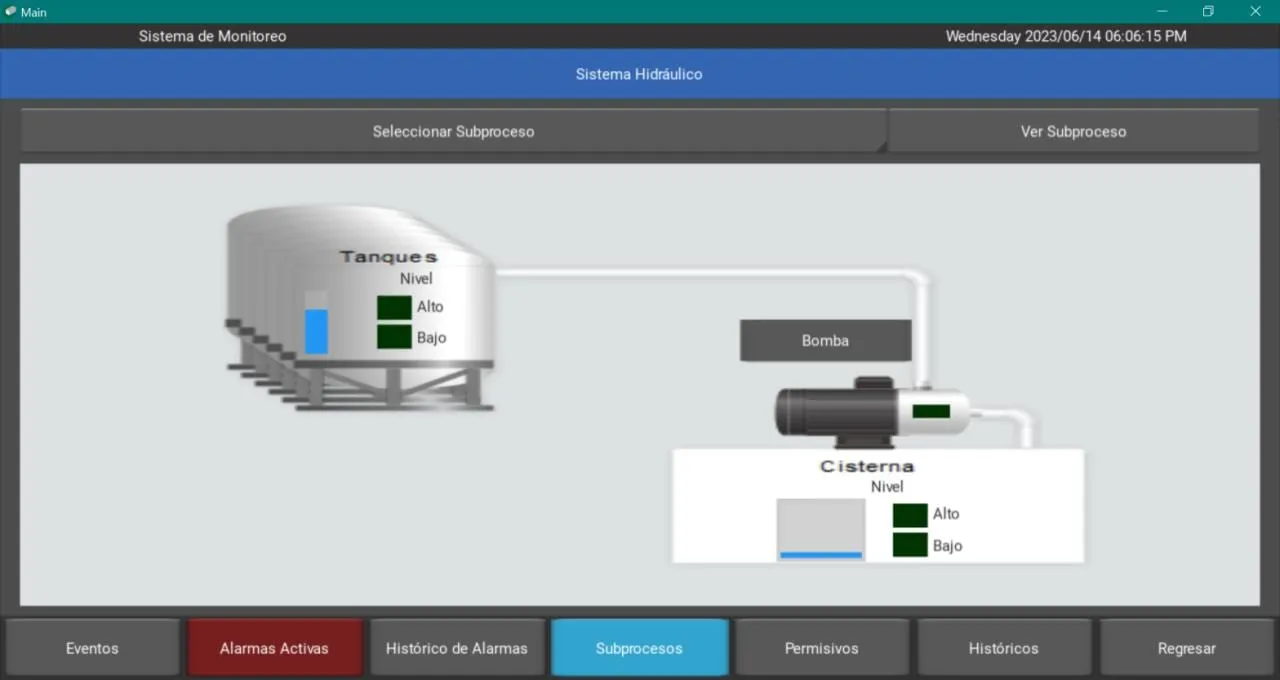
- Control layer — autonomous control logic for the pump cycle, replacing the manual six-hour schedule with sensor-driven transitions (cistern level low → pump on, tank level high → pump off, with alarm states for empty / overflow).
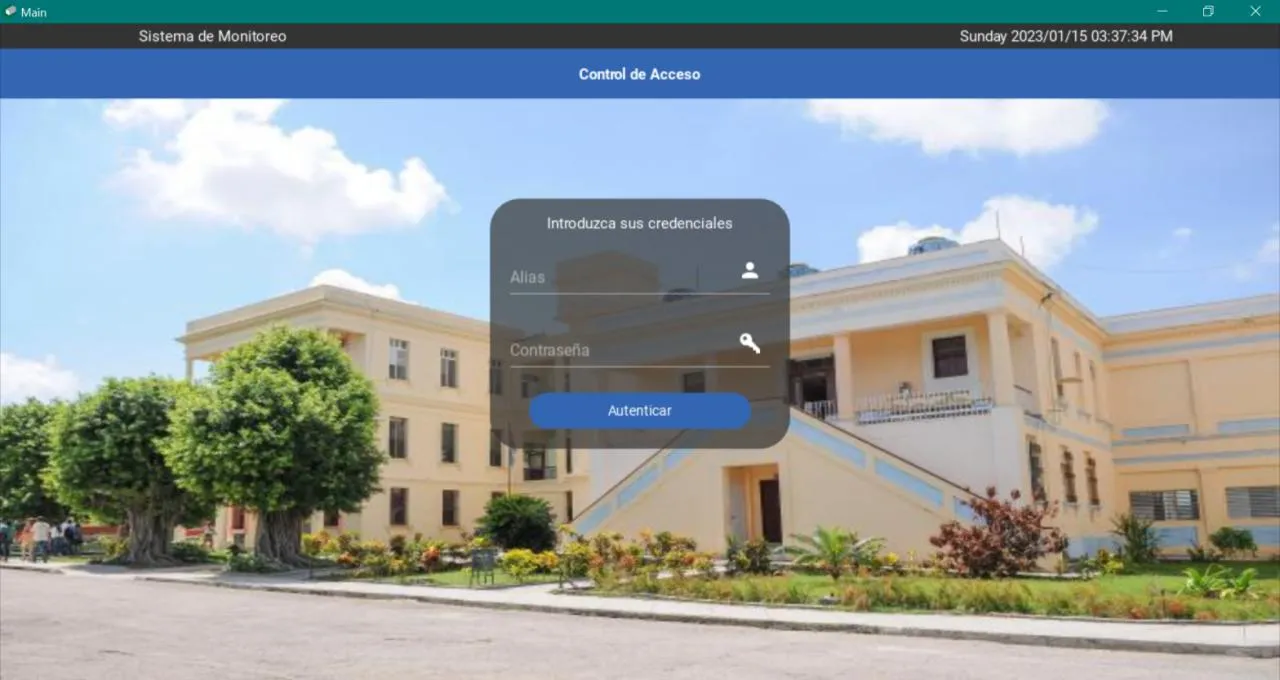
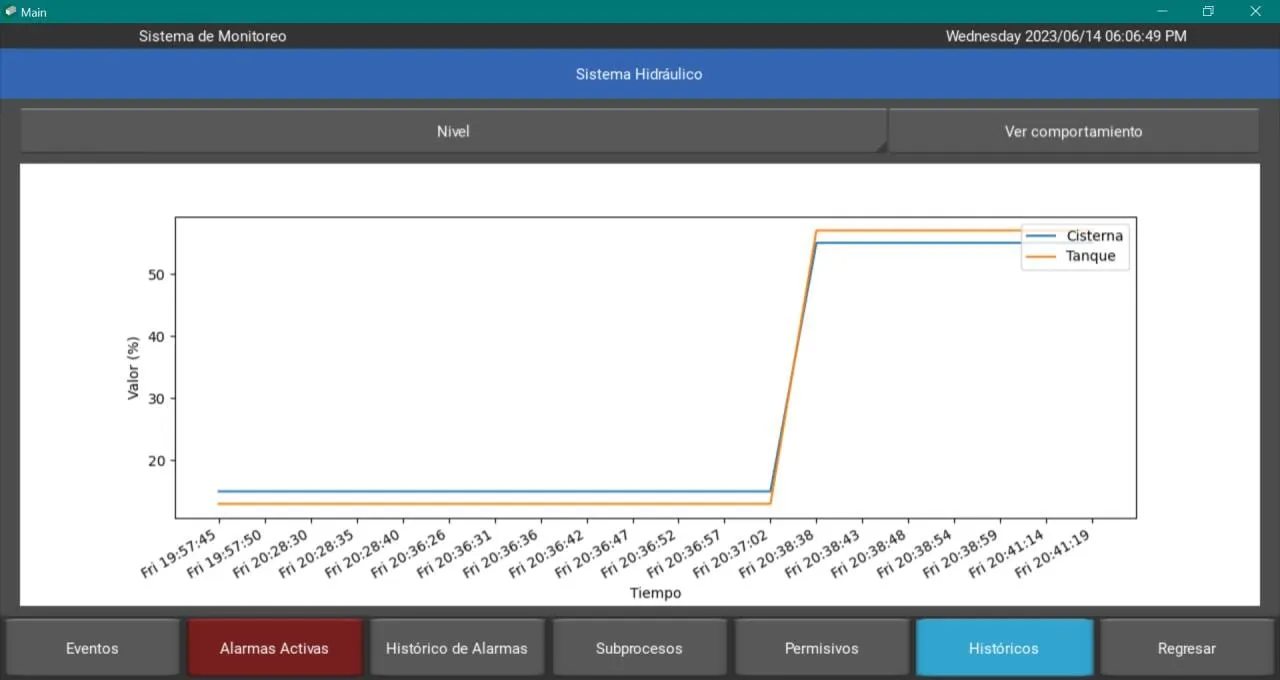
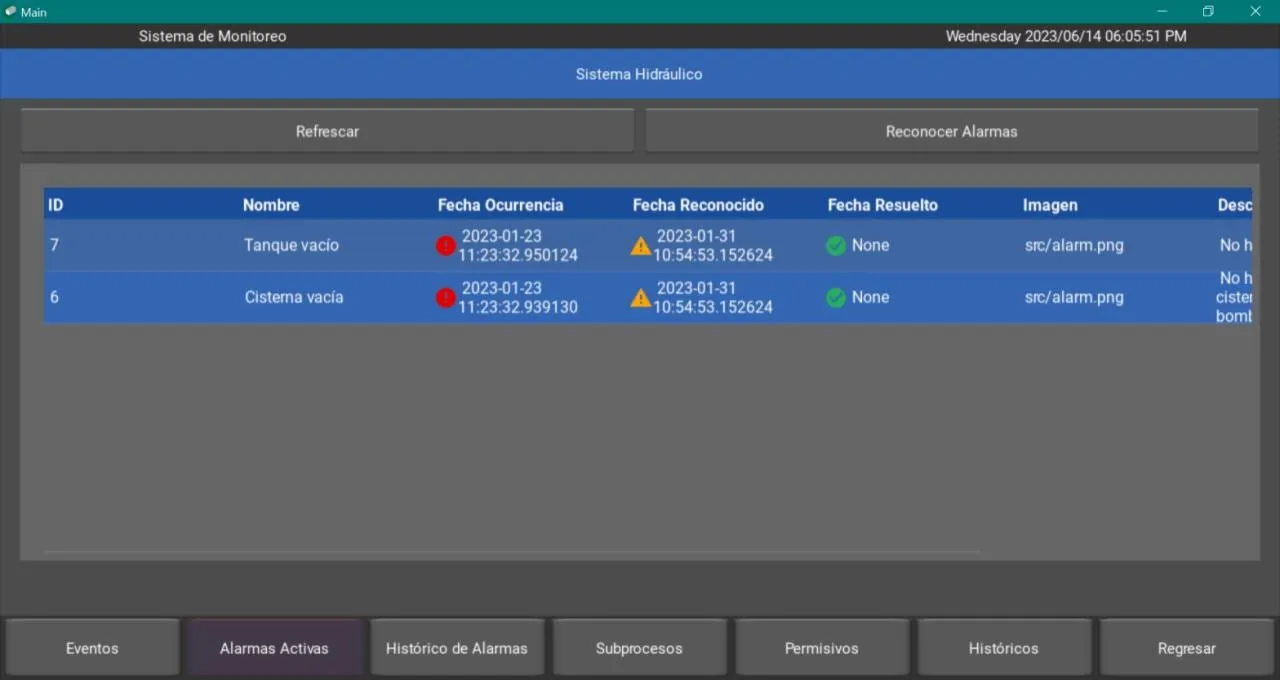
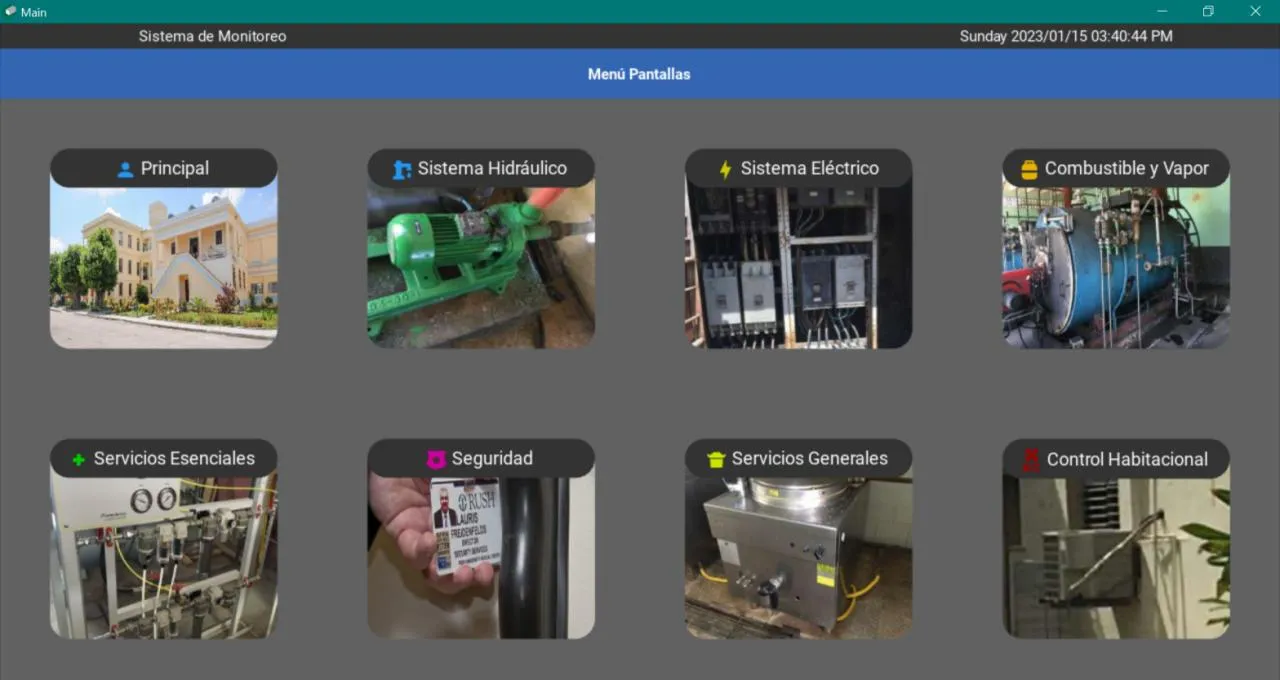
- HMI (Python + KivyMD) — the operator-facing supervisory interface shown here. Eight subsystem views — Principal, Sistema Hidráulico, Sistema Eléctrico, Combustible y Vapor, Servicios Esenciales, Seguridad, Servicios Generales, Control Habitacional — with login, real-time process views (tanks, cisterns, pump state), historical graphs, and an active-alarms table with occurrence / acknowledged / resolved timestamps.
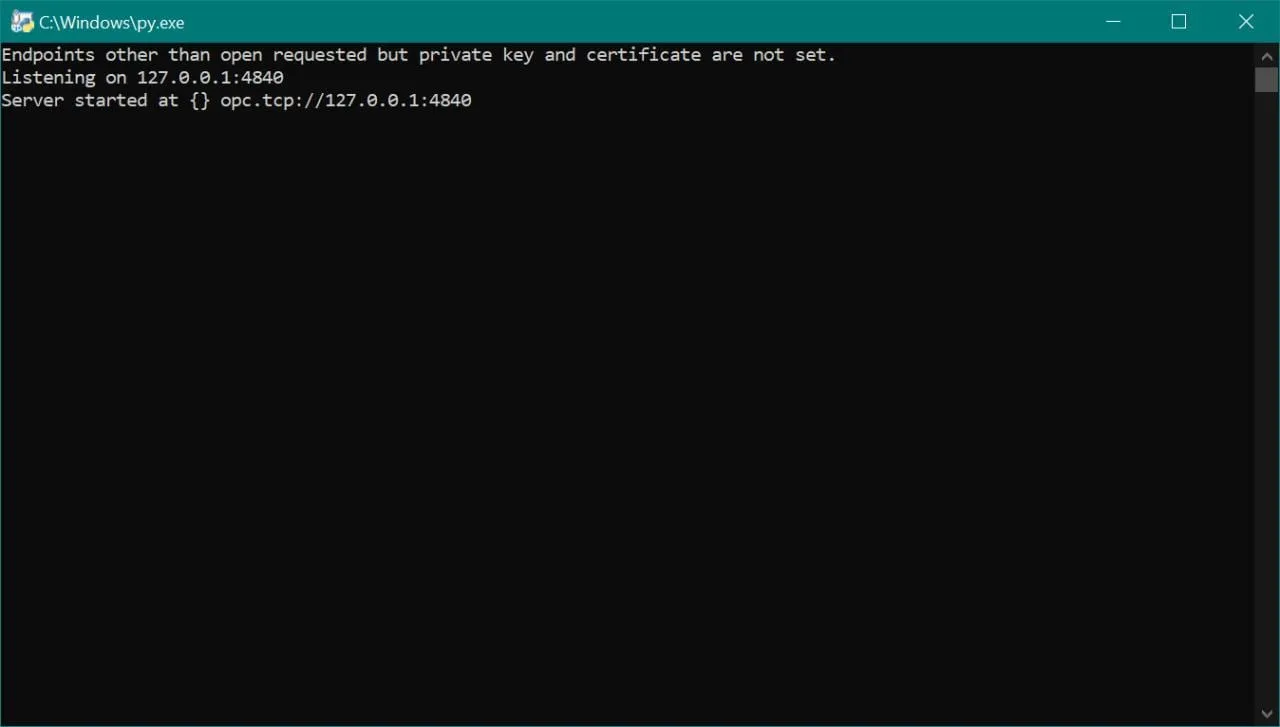
- Integration (OPC-UA) — the HMI communicated with simulated industrial PLCs over OPC-UA. The console screenshot shows the OPC-UA server running on
opc.tcp://127.0.0.1:4840, which is what the HMI was validated against end-to-end.
Outcome
The complete proposal — control logic + HMI + OPC-UA integration — was defended as my undergraduate thesis at CUJAE in 2023 and earned both the Scientific Merit Award and the Integrality Award (top academic honors that year). One of the byproducts also became a peer-reviewed publication on open-source HMI design for hospital systems.